
What the US taught us about hospitality, emotional labor, and service as care
I want to start with something personal, because I think it matters for what follows.
I’m Latin American. I grew up in a culture where hospitality isn’t a job, it’s how people show they love you. Serving someone well, anticipating what they need before they ask, noticing them: these are acts of care. They’re my love language.
So when Mews needed to understand the US market, I was genuinely excited. Not “researcher going into the field” excited. More like: I get to spend weeks inside the thing I care most about, in places I’ve never been, watching how people do it.
Six cities. Seven properties. Twenty-one interviews. Two hundred and thirty observations. Chicago, Dallas, San José, Boston, Hollywood, Pioneertown. Each one different enough that comparing them started to feel like traveling between countries, not cities.
Here’s what I didn’t expect: by the end of it, I wasn’t looking at a USA story at all.
The same feeling
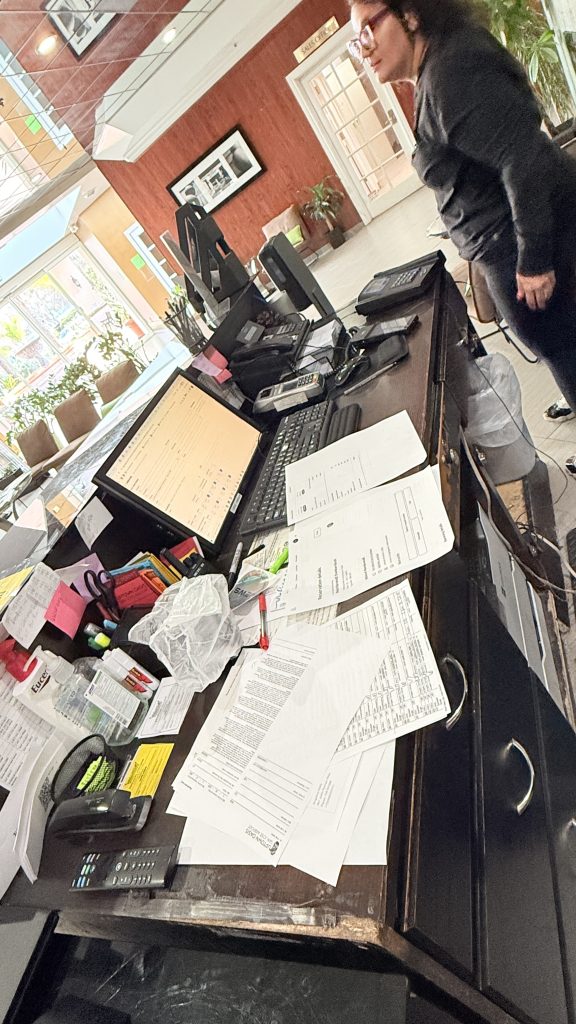
The moment I keep coming back to happened in the California desert, at a small property. I was watching a general manager, who decided to still be working after retirement, forty years in hospitality, the kind of person who has turned this work into something close to an art form, sitting behind the desk of a lobby, feeding birds, and reading guests’ body language who hadn’t yet reached the desk.

In the few seconds before that interaction officially began, he had already adjusted his tone, decided what to volunteer, and calibrated his pace. Not from a script. From four decades of paying attention to people.
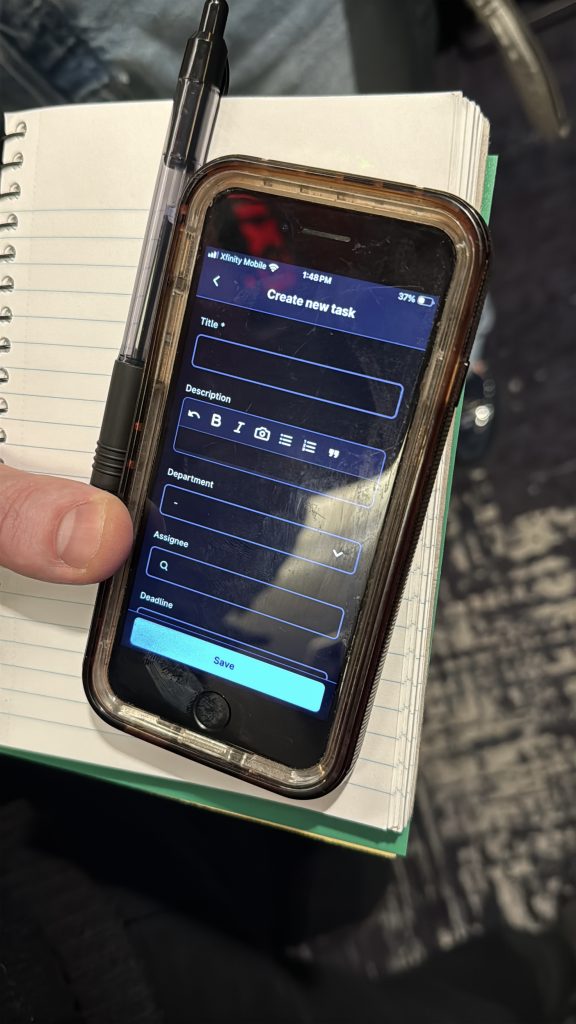
When he needs to pass that instinct on, he writes it on a Post-it note and leaves it at the desk for whoever comes next.
I thought about that note for the rest of the trip. Not because it was a system gap I needed to document. Because of what it said about him, about the care he’d put into his craft, and how much of it existed only in his hands, transferable only if someone physically picked up a piece of paper he’d left behind.
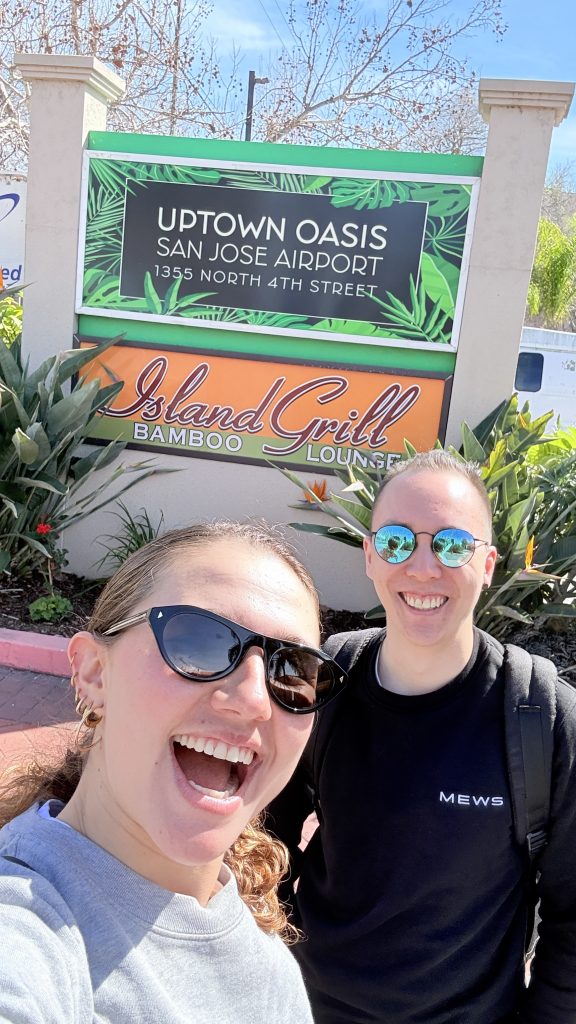
In San José, I spent time with a front desk agent during a solo shift. One person, the whole property, a queue of guests, a system that required her to click and wait and click and wait just to confirm that each action had actually landed. I watched her hold a guest’s frustration with complete grace while internally managing the operational chaos of five open tabs and a billing flag that had surfaced too late to resolve quietly.
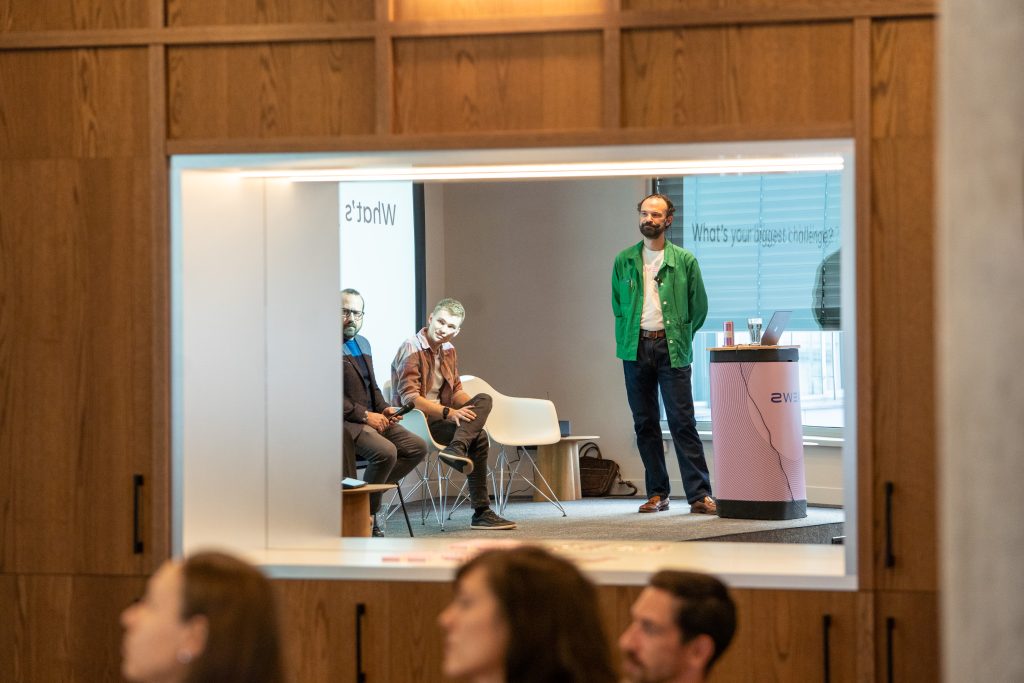
Hospitality is a human act. Technology should make it easier, not harder.
That’s what we’re building at Mews.
She wasn’t overwhelmed. She was skilled. But her skill was being spent almost entirely on compensating for the gap between what guests needed and what the tools gave her to work with.
What stayed with me was her face when the guest finally smiled. The way her shoulders dropped just slightly. The effort it had cost her, invisible to the guest, invisible to the system, visible only to me because I was right there.
In Boston, I met someone who prepared handover notes at home, on her days off, on her personal phone, so her team wouldn’t be caught off guard when she wasn’t there. She didn’t frame this as a sacrifice. She framed it as: of course I do this, because I care about my team.
And across the room, a colleague had memorized the dietary needs of returning guests and had called the restaurant ahead of their arrival. Not because there was a process for it. Because he had noticed, filed it away, and decided it mattered.
I kept asking myself: What does it cost a person to carry all of this? Not in hours, but in the kind of sustained attention and care that doesn’t turn off when the shift ends. These weren’t edge cases. They showed up everywhere, in every city, in every property I visited. Staff are doing invisible emotional work on personal time on personal phones because that’s what the job actually requires, and nobody has built the tools around that reality.
In Chicago, a manager told me he checks a certain report every morning before getting out of bed. Not because it’s in his job description. Because he’d learned, through experience, that a guest surprised by an unexpected charge is always harder to help than one who hears about it proactively. He’d built a personal ritual around preventing a specific kind of pain.
He described it matter-of-factly, like it was obvious. To him, it was. To me, sitting across from him, it was one of the most quietly remarkable things I heard on the entire trip: someone who cares so much about the guest experience that he’d folded it into the first minutes of every day, before he’d even had coffee.
What the US is actually telling us
There’s a cultural contract at work in the US hospitality industry that makes all of this visible. Guests arrive believing that whatever they experience is someone’s responsibility to fix. “The customer is always right” isn’t just a saying. It’s a baseline assumption that shapes every interaction. And if anything falls short of what they imagined, the consequences are public and immediate: a 1-star review, posted from the parking lot before they’ve even pulled out of the driveway. This type of reaction has quietly rebuilt the entire industry around managing exceptions rather than serving the rule.
There’s a concept in psychology, emotional labor, that names what happens on the other side of that dynamic. The staff member absorbs the guest’s energy, regulates their own reaction, and turns that invisible internal effort into something that feels effortless to the guest. It’s unsaid, unglamorous, and absolutely essential. And it’s the thing I watched happening, over and over, in every city I visited.
Hotels have rebuilt their entire operational flows around protecting against the one guest in a thousand who will demand to speak to a manager and make someone’s shift miserable. Here’s the cost of that: the other guests, the ones who just want a good experience and will never say a word either way, get a service shaped by fear instead of care. The guests who would have loved a moment of being genuinely seen, and didn’t get it, not because the staff didn’t want to give it to them, but because the conditions for it were never there.
The twist
You might read all of this as a US story. A consequence of a particular consumer culture, a set of pressures that don’t translate elsewhere. It isn’t.
In Europe, the hospitality contract runs in the opposite direction. The hotel is always right. Guests adapt to the hotel’s culture, because that is the experience, and that’s what they came for. A disappointed expectation is absorbed silently, sometimes even admiringly, because friction is part of the texture of a place with character.
But here’s the problem with that: when feedback is invisible, the problem is invisible too. In US, every bad experience becomes a 1-star review, publicly, immediately. Painful, yes. But also: data. In Europe, the same disappointment disappears into the guest’s private experience, and the hotel never learns.
Neither model is right. But they illuminate each other.
The emotional labor I watched happening across every desk in San José, Boston, and Chicago, it’s also happening in Amsterdam, Barcelona, and Prague. The Post-it note in California has its equivalent in a Dutch boutique hotel, left handwritten in a notebook. The five open tabs, the personal email used as a handover tool, the morning ritual of checking reports before coffee: these aren’t North American behaviors. They’re hospitality behaviors.
They’re not US problems. They’re human ones. And the people carrying them, with grace, with care, often invisibly, deserve tools that are built around what the job actually asks of them.
What this means
The Mews Constitution says hospitality is a human act, and that technology’s role is to manifest value through that act, not instead of it.
After this trip, I understand that statement differently than I did before.
The opportunity isn’t to replace emotional labor. It can’t be. What a system can do is protect the conditions that make emotional labor possible. Surface the right context before the guest arrives. Handle the mechanical work so the human can focus on the human part. Make it possible for the next person, the one still developing their instincts, to walk into their first guest interaction already prepared, not because they studied the notes, but because the right information was already there.
The manager in California has been writing those Post-it notes for forty years. That knowledge, that care, that accumulated instinct, deserves a better home than a piece of paper on a desk.
That’s what I came home thinking about. That’s what I think we’re building toward.